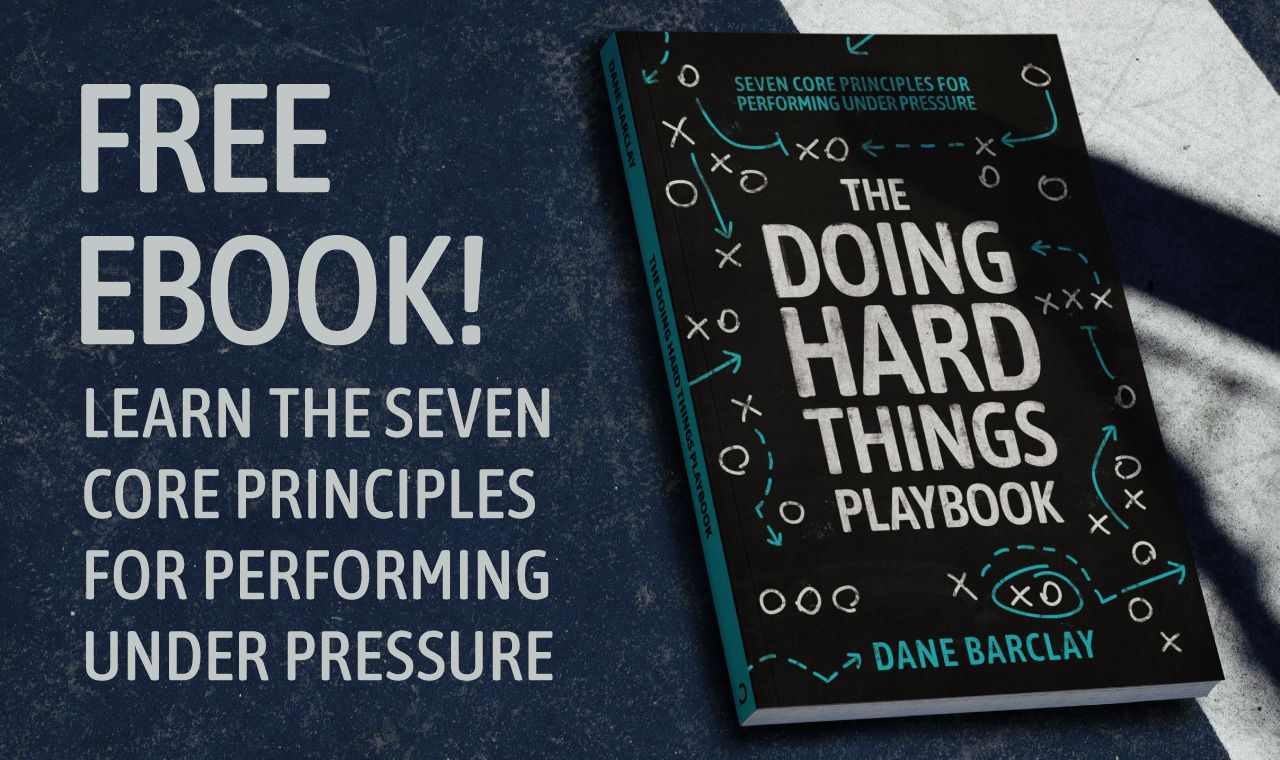
Get comfortable with your discomfort: Dane Barclay at TedX Queenstown
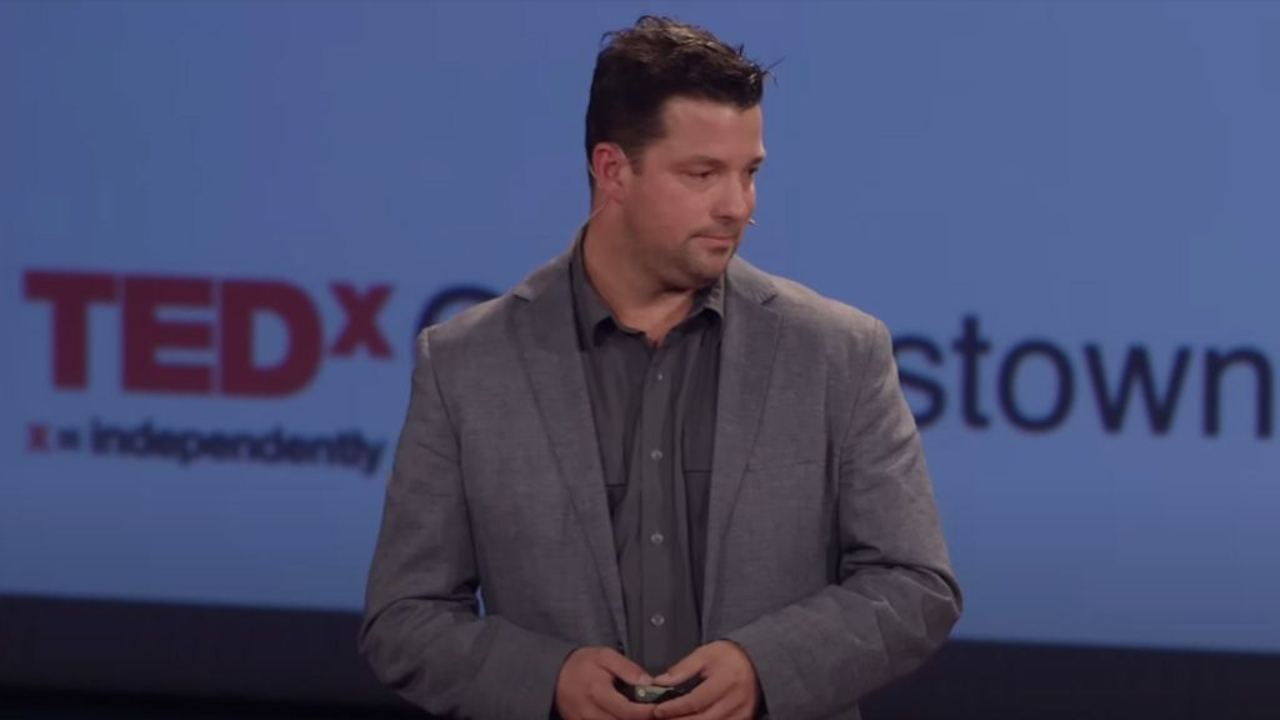
Dane Barclay delivers his featured talk at TEDxQueenstown 2015, drawing on his experience as a performance psychologist specialising in determination and discipline to demonstrate how the brain operates under pressure and how you can learn to move out of your comfort zone.
Watch below, or on the official TEDx Talks YouTube channel.
Do you recall those moments that you were so nervous or under pressure that you could not perform? Athletes and in fact any high performing person goes through the same. Dane unwraps some of the most basic, and we are talking primal reactions and why we should overcome them. Stay tuned for some high performance 'non-invasive neurosurgery'.
Dane works with Olympic and Commonwealth Games medalists, touring professionals, elite athletes and multinational companies to understand how to thrive under pressure and get the best out of themselves. Dane is a performance psychologist specialising in determination and discipline.
Transcript:
Humans, we chase happiness and we chase comfort. So why would we even want to invite discomfort into our life? In my day to day work, I'm constantly managing people's discomfort in the areas that it shows up, either in sport or clinical settings. One thing I do know, though, is this: We don't have to be governed by 300 million years of evolution.
We do not have to be hardwired. So I want you to think about your stories. Think about where you get uncomfortable. Think about where you feel sick. Think about where you have anxiety. How do you behave? Is change and do you regret it? I'm here today to help you become more comfortable with your discomfort.
Life is the place to experience stress and anxiety. It's going to show up. And although we know this intellectually, we don't experience it emotionally. Now, a lot of us are very skilled at avoiding discomfort, stopping thoughts. I just want to do a little experiment with you right now, please. Who here has had their daily cup of coffee?
For the next 4 seconds, whatever you do, I want you not to think about that cup of coffee you try hardest. Seriously, how's that working out for you? Right. So you might actually give the illusion of control. You need to think about your cup of coffee to know that you're not thinking about your cup of coffee. And when it comes to negative thoughts, negative feelings, the more we don't want to experience those negative thoughts and feelings, the more our mind pays attention to them.
This is a reality of life. Who here remembers riding a bike for the first time without training wheels? Boy, it's great. It's an interesting experience, honestly, with my older brother and my relationship with my older brother was at best competitive and at worst, a little sadistic. The big day came along. I took off the training wheels. I was anxious. I was excited. It was a big deal. I said to my brother, "can you please guide me on the driveway?" And he's absolutely down. So I sit down on the bike, took a breath. I push forward. For about ten feet - felt like 100 meters. Really proud of myself. I turned around for his rapturous applause, and there he was, he hadn't moved, he was just standing there laughing at me. And my little brain panicked.
My attention left what I was doing, task, and it went internal. It started to pick up on how I felt and I promptly fell over, grazed my knees, grazed my face. The next day, though, just like little kids, I got back on the bike. I was able to experience anxiety and still commit to action. And as we move into adulthood, we tend to shift away from that. We tend to try and protect ourselves. We tend to not want to get out of our comfort zone. We become rigid and inflexible.
So we need to shift this paradigm. We need to flip it on its head. We need to move from feeling good to perform to performing no matter how we feel. It's counterintuitive.
A client of mine is a professional poker player. Has this attitude of who dares wins. But it wasn't always this way. He reflected on his games that at times his emotions weren't always the best guide for his decisions, particularly under stress and pressure. And he said he had this moment of clarity one day whereby he noticed it was like life; it's a long game. And here he was consumed playing hand by hand. And he's able to get some distance from that. He was able to start to play irrespective of how he felt, and making the right decisions. And what this gave him was freedom, this gave him freedom to perform.
When you become comfortable with your own discomfort, it gives you freedom.
We live in a modern world, right? But we're still governed by 300 million years of evolution. And I've got a little model here that will help you understand, by Dr. Dan Siegel, some of you may be familiar. What I'd like you all to do is raise your hand with me, please.
Right. Your hand is your brain. Okay. Now, brain fits roughly here, and the eyes are here when you open your palm of the hand. This is, in essence, the reptilian part of the brain. So the brainstem controls all basic functions. Sex, hunger, sleep. The mind's all about fixing problems. So think about when you're hungry. Where does your attention go to? You typically stop what you're doing and you go and eat a sandwich. Problem solved. Fantastic. If you're not getting uncomfortable, that's okay.
In comes your thumb. This is your limbic system. It's roughly 200 million years old. It's the mammalian part of the brain. And for any of you with cats or dogs, the reason you can feel a bit of love when you get home and you see them, it's because in here is empathy and compassion are really useful for getting into your comfort zone. These two guys control your behaviors under stress.
Over the top. This is our prefrontal cortex. Our human brain. At least 100 million years old. The reason you can't convince yourself that you feel good when you don't feel good is because it's at least 200 million years younger than the oldest part of your brain. So it controls emotional regulation and all your higher order decision making. So this is your brain when you're feeling confident, when you're feeling comfortable, when you're on task.
And this is what happens when your brain detects a threat. You flip your lid. You freak out.
So what's really going on here is your brain is about processing energy and information. Blood leaves the prefrontal cortex, flows into the limbic system to prepare you for action. And the work I do is helping athletes and other individuals start to transfer the blood flow back up to the prefrontal cortex, no matter what they're experiencing. Bring your hands down. Thank you.
So when you get familiar with your reptilian brain and your mammalian brain, it starts to give you freedom. And you can make my job redundant. You can become your own personal, noninvasive neurosurgeon. Athletes on international stages are haunted by perfection. All the years of training, sacrifice, one chance to get it right. And if you want to know what it's like behind the scenes, it's exciting, yeah. It's anxiety provoking, absolutely.
This might surprise you, but it's smelly. It absolutely stinks. You might be wondering what's going on. Well, just like a little bird that you walk up to in the street and it poos and flies away, trying to protect itself from the predator, making itself as smelly and messy as possible. This is exactly what goes on with athletes. Their brain tries to protect them from the predator of failure, stress of anxiety. It brings on the physical symptoms, vomit and diarrhea. And some of you may know that experience and some TED presenters today might know that experience as well.
So the only way to get through this is exposure to the emotion. When athletes become willing to experience discomfort, they can get on with task no matter what they're feeling.
Uncomfortable thoughts and feelings do not have to define your behaviors. So let's move on from the mythology that we need to feel good before we perform. If a little kid on a bike can do it and you were that little kid on a bike, you can do it again.
So next time you come up against a challenge and your lid's flipping, so to speak, it's a behavioral experiment. It's an opportunity for growth. So when this challenge comes along, I've got a couple of tips for you.
Notice where your attention is at. Are you on task or are you trying to fix how you feel?
Secondly, normalize the experience. It's your brain trying to protect you.
Finally, commit to action. You'll either learn that you can do it or that you can cope. And coping isn't about feeling good.
So I encourage you all, when you leave here for the rest of your life, go out and get as uncomfortable as possible. When you do, it will give you the freedom to perform no matter how you feel.
Thank you.
Found this article helpful? Don't miss the next one!
Join our mailing list to receive the latest tips and guides to achieving peak performance.